
Animal Experimentation Service (SEA)
Transparency
Institutional statement on the use of experimental animals
The Sant Pau Research Institute of the Hospital de la Santa Creu i Sant Pau (FIRHSCSP), hereinafter Research Institute (RI), has adhered to the Transparency Agreement on animal experimentation, promoted by the Confederation of Scientific Societies of Spain (COSCE), with the collaboration of the European Association for Animal Research (EARA) and presented on September 20, 2016. We are aware that animal research plays a fundamental role in understanding the biological mechanisms involved in diseases and in the development of medical treatments. Without the use of animals, we would not have most of the medications, antibiotics, vaccines and surgical techniques that are applied in human and veterinary healthcare. Experimental research with animals, which is part of the scientific work carried out at the RI, is committed to improving people's lives and is an essential component of translational medicine (cardiology, oncogenesis and antitumor treatments, neurodegenerative diseases, etc.).
The welfare of experimental animals is a fundamental issue for the RI, as well as strict respect and compliance with current legislation on the protection of animals used in experimentation and other scientific purposes, including teaching. Our goal is to achieve the highest standards of animal welfare, not only from the point of view of human obligations towards animals, but also because it would not be possible to achieve high-quality research without this welfare. Our animal experimentation complies with legal standards and is reviewed by an ethical and scientific committee on animal experimentation, which promotes the use of alternative methods, the reduction in the number of animals used and the refinement of experimental procedures. No research project that requires the use of animals can begin without the necessary ethical evaluation and final approval from the corresponding competent authority.
The RI is also responsible for ensuring that both animal care staff and researchers involved in experimentation have adequate training and knowledge, and is committed to providing the necessary resources for the proper maintenance of experimental animals with regard to facilities, maintenance, welfare and veterinary care.
Transparency Agreement document:

Who we are
Contact mail: estabulari@santpau.cat

What we do
The Animal Experimental Service is the area dedicated to the maintenance and care of experimental animals, the performance of experimental procedures that use them and the processing of the samples obtained. The SEA has ISO 9001:2015 certification and guarantees compliance with the legal and ethical standards linked to the use of animals for experimentation and for other scientific purposes, which is why it is officially registered as a breeding center, supplier and user of experimental animals (B9900067 and REGA ES080190036528); it also has authorization to house and work with Genetically Modified Organisms (A/ES/08/21 and A/ES/08/I-14). SEA staff are officially trained and qualified to perform the appropriate functions: animal care, design and performance of procedures and projects, on-site supervision of animal welfare and care, and designated veterinarian.
Translational research requires responsible use of experimental animals and reproducibility of results. The use of animals of high genetic and health quality and their use, maintenance and welfare in adequate facilities are essential to obtain these results.
Equipment
The SEA has a conventional animal facility, which has the necessary facilities to simultaneously maintain and house up to 40 pigs, 12 sheep, 114 rabbits, 350 rats and 2500 mice in conventional conditions and 90 rats and 2500 mice in Special Pathogen Free (SPF) conditions.
The SEA consists of 2 separate buildings:
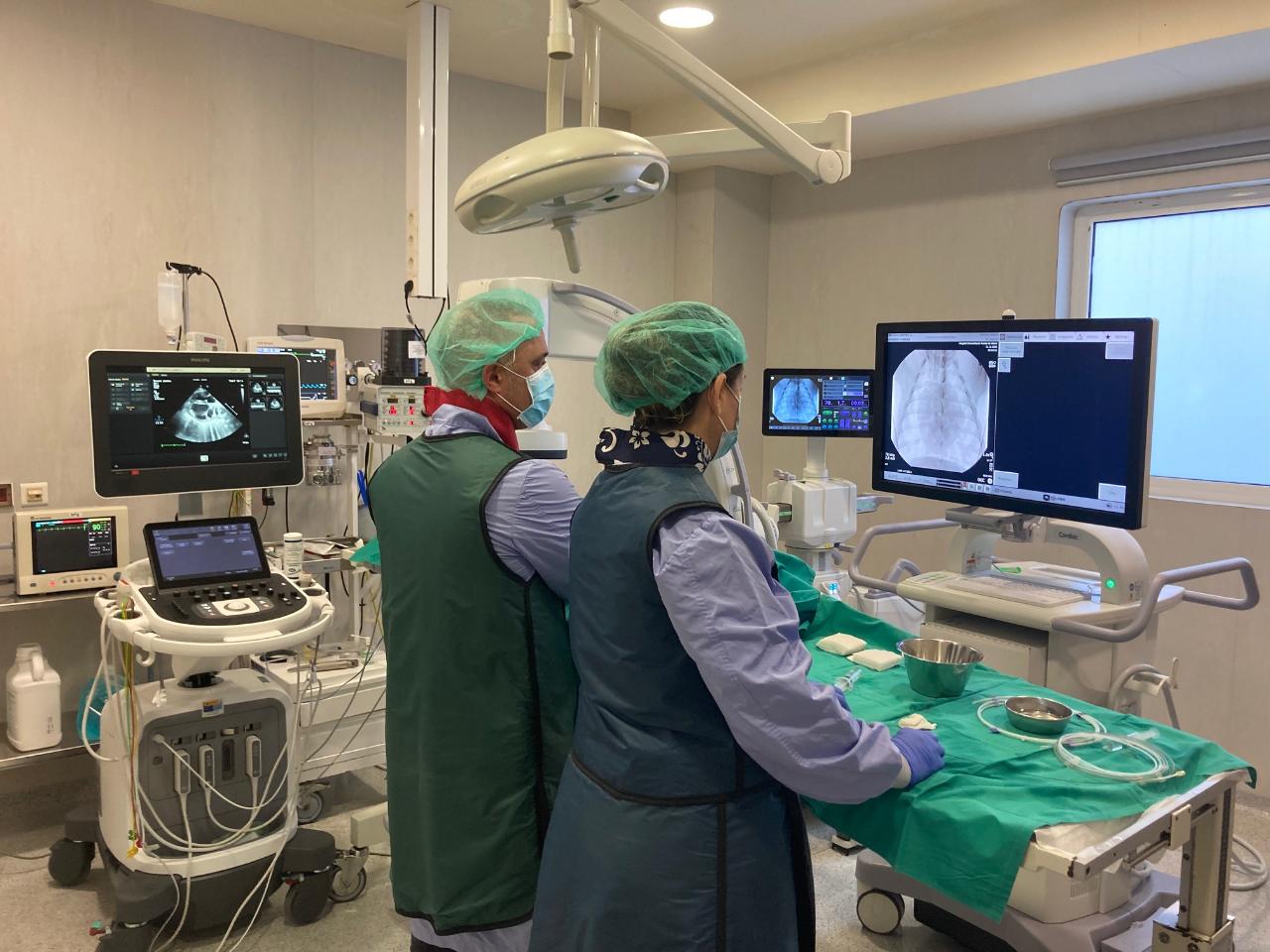
- The Conventional Animal Facility, with a usable area of 650 m² on a single floor, is designed following the requirements of Decree 214/1997 and Royal Decree 53/2013. It has working rooms for rodents and rabbits and 4 experimental operating rooms for pigs and sheep, as well as advanced medical and research equipment for small animals: bioluminescence and fluorescence (IVIS 200), high-frequency ultrasound (VevoF2), intravital microscope, flow measurement equipment and probes, ECG monitor, IBP equipment, mechanical ventilators and sevoflurane/isoflurane anesthesia equipment. For large mammals, the SEA has multiparametric monitors, defibrillators, sevoflurane/isoflurane anesthesia equipment, mechanical ventilators, X-ray equipment (Philips BV and General Electrics OEC Elite), transthoracic and transesophageal echocardiography equipment (Philips Avant), intravascular echocardiography (Siemens Acuson), real-time 3D imaging equipment (CartoXP), radiofrequency ablation equipment, 12-lead ECG and 4 towers for high-definition laparoscopic surgery (Covidien).
- The SPF-Biomodule is a 30 m² barrier zone isolated from the main building that can house up to 400 immunocompromised mice. Entry to the facility is through an air shower for people or a peroxide SAS for materials. Work is carried out under a laminar flow cabinet and there is a work area for in vivo analysis by fluorescence and/or bioluminescence (IVIS Spectrum CT), as well as gas anesthesia equipment.
The SEA also organizes surgical skills training for healthcare personnel.
Training
The SEA offers scientific, instrumental and technical advice and support to the different research groups. In addition, it monitors compliance with current legislation and advises on compliance with the requirements of replacement, reduction and refinement (3Rs) in the use of animals in experimental procedures.
Rates
Check our rates.
