
A Study on Frailty in Patients With Cirrhosis Recognized by Biomolecules
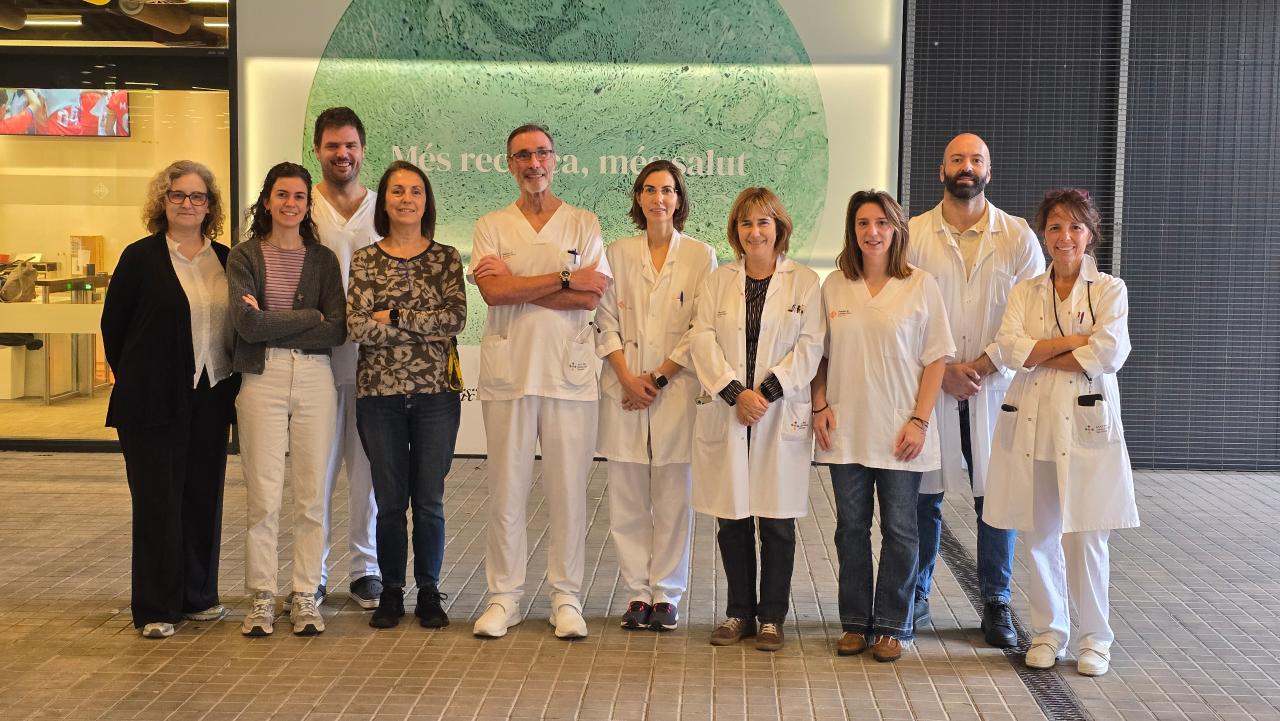
Frailty is one of the complications that can affect the quality of life and prognosis of people with cirrhosis, but the biological mechanisms involved are not yet fully understood. Research involving the Institut de Recerca Sant Pau (IR Sant Pau) made it possible to identify several biomarkers associated with this condition. The study, published in November 2024, has recently received the Editor’s Choice recognition from the scientific journal Biomolecules, which highlights articles that its editors consider particularly interesting or relevant in their field.
The research, conducted by investigators from IR Sant Pau and the Universities of Bologna and Camerino in Italy, explored the biological mechanisms associated with frailty in people with advanced chronic liver disease. This condition is characterized by a decline in strength, physical capacity, and endurance, and is associated with a higher risk of complications, hospitalizations, and mortality, regardless of the severity of the underlying liver disease.
The study analyzed 37 patients with advanced chronic liver disease, 32 of whom had frailty or prefrailty. These 32 patients had been randomly assigned to either a group receiving a multifactorial nonpharmacological intervention consisting of home-based physical exercise, branched-chain amino acid supplementation, and probiotic administration for twelve months, or a control group.
The results showed that frailty is not merely a manifestation of physical and cognitive decline but is also associated with several biomarkers of systemic inflammation, bacterial translocation, and liver injury, as well as changes in amino acid and short-chain fatty acid metabolism. Short-chain fatty acids are compounds that can be produced by the gut microbiota. In addition, one of the most significant findings was that patients who received the multifactorial intervention experienced an improvement in frailty, as assessed using the Liver Frailty Index, and a reduction in certain inflammatory and cellular damage biomarkers compared with the control group.
“Frailty is a major concern in patients with cirrhosis because it affects their quality of life and disease prognosis. This study helped us better understand the biological mechanisms involved and identify changes associated with improvements in frailty following a nonpharmacological intervention. Understanding these processes is important for advancing toward more effective prevention and treatment strategies,” explains Dr. German Soriano, a researcher in the Digestive Pathology Research Group at IR Sant Pau and a specialist in the Department of Digestive Diseases at Hospital de la Santa Creu i Sant Pau.
The authors emphasize that the findings should be interpreted in light of several limitations, including the small number of participants, the fact that patients had relatively preserved liver function, and the inability to determine the contribution of each individual component to the observed effects because the intervention was multifactorial.
The Editor’s Choice selection by Biomolecules recognizes a line of research that opens new perspectives not only for understanding and addressing frailty in advanced liver disease but also for preserving functional capacity, independence, and quality of life among people living with this condition.
Reference Article
Laghi L, Ortiz MÀ, Rossi G, Román E, Mengucci C, Cantó E, Biagini L, Sánchez E, Mulet M, García-Osuna Á, Urgell E, Kaur N, Poca M, Padrós J, Nadal MJ, Cuyàs B, Alvarado E, Vidal S, Juanes E, Ferrero-Gregori A, Escorsell À, Soriano G. Biomarkers of frailty in patients with advanced chronic liver disease undergoing a multifactorial intervention consisting of home exercise, branched-chain amino acids, and probiotics. Biomolecules. 2024;14:1410. https://doi.org/10.3390/biom14111410
