
Neurosurgery
Neurological Diseases, Neuroscience and Mental Health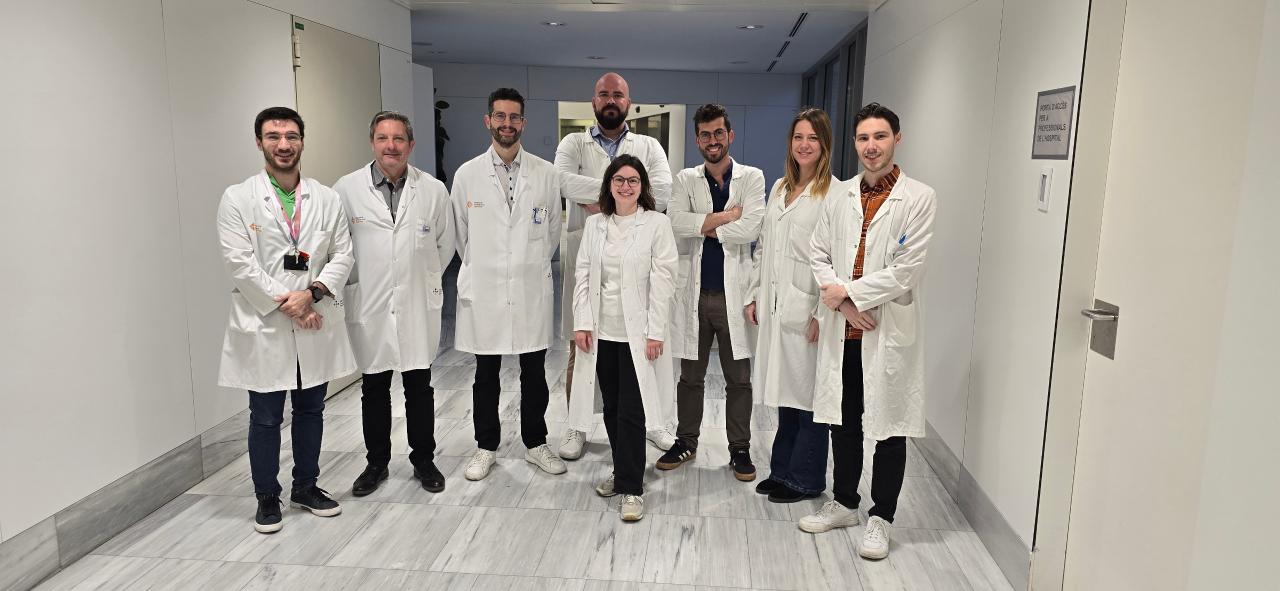
This team is a young research group with a clear mission: improve the quality of life of patients and, at the same time, be able to contribute improvements in healthcare practice through research into potentially surgical neurological disease. There are 4 areas of knowledge where our group stands out nationally and internationally: neuro-oncology, skull base, functional neurosurgery, and spine.
Main lines of research
- Tumor biology: gliomas (prognostic value of different mutations in anaplastic astrocytoma and GBM). (Freixer, Berta; Casitas Vicente).
- Tumor biology: Neuroendocrine Tumors (pituitary adenomas). (Muñoz Hernandez, Fernando).
- Biomarkers in anaplastic astrocytomas and glioblastoma multiforme. (Freixer, Berta; Casitas Vicente).
- Application of new technologies in the resection of intracranial tumors. (De Quintana Schmidt, Cristian Jose).
- Towards a pharmacological treatment for SYNGAP1 deficiency. Preclinical studies to investigate the efficacy of 4 drugs in the rescue of the main phenotypes. (Freixer, Berta; Casitas Vicente).
- Prospective study of patients operated by endoscopic endonasal approach. (Muñoz Hernandez, Fernando).
- Anatomical studies of the skull base. (Muñoz Hernandez, Fernando).
- Clinical evaluation of neurostimulation techniques in different neurological entities (Parkinson's disease and neuropathic pain). (Rodriguez Rodriguez, Rodrigo; Aibar Duran, Juan Angel).
- Neurostimulation for resistant craniofacial pain (jointly with Neurology and Pain Clinic Unit). (Rodriguez Rodriguez, Rodrigo; Aibar Duran, Juan Angel).
- Study of brain neuromodulation techniques for psychiatric indications (depression and schizophrenia). (Rodriguez Rodriguez, Rodrigo; Aibar Duran, Juan Angel).
- Use of intraoperative ecography for treatment of brain tumors. (De Quintana Schmidt, Cristian Jose).
- Monitor the glioma tumor diagnosis, treatment, and prognostic factors (Hospital Sant Pau). (Freixer, Berta; Casitas Vicente).
- Pituitary adenoma treatment: medial cavernous sinus wall approach to cure adenomas. (Muñoz Hernandez, Fernando).
- Intraoperative neuromonitoring of oculomotor cranial nerves in skull base tumors. (Muñoz Hernandez, Fernando).
- Pre-op and post-op volumetric study in OPEN laminectomies vs. MISS (tubular) laminectomies. (Patino Alvarado, Juan Diego; Leidinger, Andreas).
- The impact of lateral lumbar interbody fusion on psoas muscle morphology. (Patino Alvarado, Juan Diego; Leidinger, Andreas).
Scientific Challenges
- Neurotech Laboratory is a research and development lab dedicated to the design and testing of human implantable and external neuromodulation devices aimed at improving specific neurological conditions.
- Neurostimulation for resistant craniofacial pain (jointly with Neurology and Pain Clinic Unit).
- Deep brain stimulation for resistant psychiatric disease: depression and schizophrenia.
- Use of intraoperative ecography for treatment of brain tumors. How to maximize the extent of resection.
- Use of tractography in resection of brain tumors
- Better outcomes in pituitary surgery by removing the tumor inside the cavernous sinus
- Use of artificial intelligence and volume calculation to assess outcomes of spine surgery
- Implementation of HIFU treatment in patients with neurological and psychiatric disorders.
Contact
Fernando Muñoz
fmunoz@santpau.cat