
Critical Care Medicine
Translational Medicine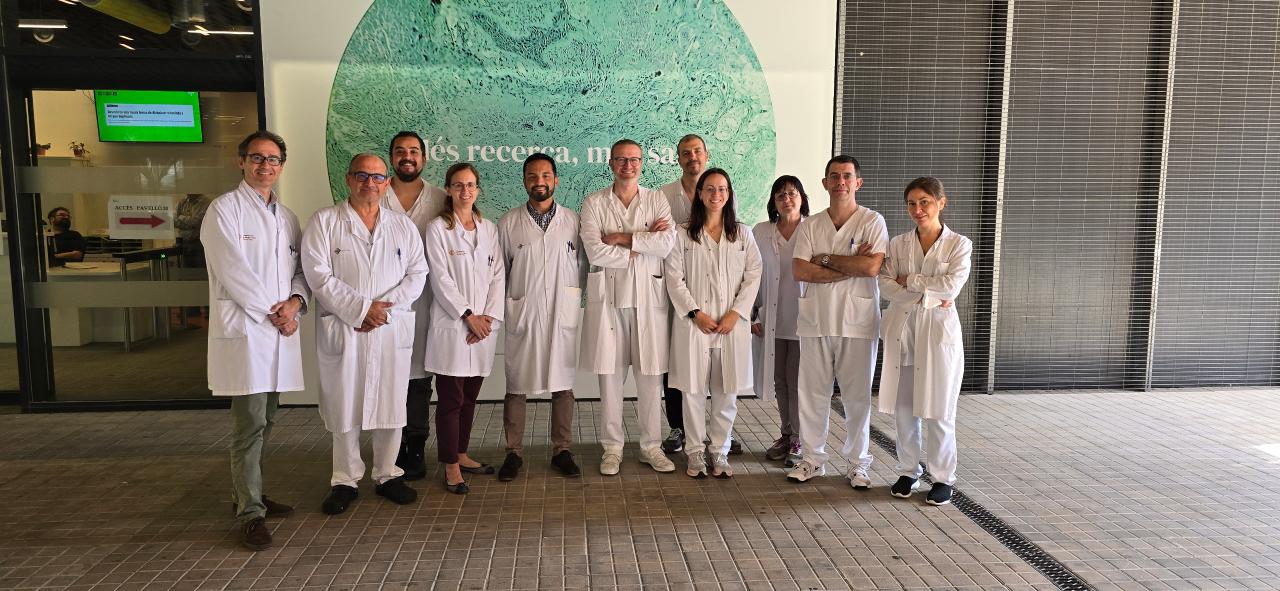
This research group focuses on clinical and physiological studies related to respiratory failure, ventilatory support, invasive and non-invasive hemodynamic monitoring including ultrasound, sepsis, and acute kidney injury biomarkers; and the management of critically ill onco-hematologic patients. In 2024, we participated in healthcare innovation programs such as Innopau and HealthTech.
Principal research lines
- Respiratory Failure and Ventilatory Support: Consolidated research line focused on non-invasive monitoring of respiratory patterns, optimal PEEP titration, and weaning from mechanical ventilation. (Mas Serra, Arantxa; Moran Chorro, Indalecio; Subira Cuyas, Carles; Rodriguez Farre, Nuria).
- Invasive and Non-Invasive Hemodynamic Monitoring: Established a national research network mainly focused on ultrasound-based monitoring. (Zapata Fenor, Luis, Maria Torrens).
- Sepsis and Acute Kidney Injury Biomarkers: Collaborative work in national and international trials focused on sepsis management and biomarker evaluation. (Betbese Roig, Antoni Jorge; Baldira Martinez De Irujo, Jaume; Vera Artazcoz, Paula).
- Critically Ill Onco-Hematologic Patients: Emerging research line within the group, with both in-hospital and national collaborations. (Gomila Sintes, Carme; Nievas, Maria Veronica).
- Toxicology: National collaborative network and acute poisoning registry (Jaume Baldirà).
- Innovation in ICU Communication: Development of communication prototypes to enhance interaction between healthcare professionals and patients' relatives (Ariadna Bellés, Jaume Baldirà, Carles Subirà).
Scientific Challenges
- Predictive limitation of current clinical tools: Existing severity scores and clinical assessments lack sufficient sensitivity to accurately predict clinical evolution in critically ill patients. We aim to enhance predictive capacity by integrating advanced respiratory pattern analysis in both spontaneously breathing and mechanically ventilated patients, identifying subtle physiological markers that precede clinical deterioration.
- Optimizing mechanical ventilation weaning strategies: Ventilator liberation remains one of the most challenging decisions in critical care, with failure rates that prolong ICU stay and increase morbidity. Despite multiple proposed weaning protocols, there is insufficient high-quality evidence to determine which strategies are superior. Large-scale, adequately powered studies are needed to definitively compare weaning approaches and identify optimal liberation pathways. Our established multicenter network and proven experience in leading large collaborative trials position us to address this critical knowledge gap.
- Physiological optimization of ventilatory support: Fundamental questions persist regarding optimal ventilatory settings, particularly PEEP titration and patient-ventilator synchrony. Balancing lung protection with adequate gas exchange while minimizing ventilator-induced lung injury demands deeper physiological understanding and individualized strategies. Our center's expertise as a reference site for this type of research, combined with advanced monitoring capabilities during mechanical ventilation, enables us to investigate complex respiratory mechanics and hemodynamic interactions that remain poorly understood.
- Advanced hemodynamic monitoring in critical illness: Hemodynamic assessment continues to evolve rapidly, with emerging technologies and techniques constantly reshaping our understanding of cardiovascular physiology in critically ill patients. As a reference center in advanced echocardiography and invasive hemodynamic monitoring, we are positioned to address key questions regarding optimal monitoring strategies, hemodynamic targets, and their integration into clinical decision-making algorithms.
- Integration of multimodal biomarkers: Combining clinicls and monitoring with biomarkers of acute kidney injury, infection, and toxicological factors presents both a technical and conceptual challenge in creating comprehensive predictive models.
- Advancing toxicological knowledge through systematic data collection: Understanding epidemiological trends, clinical presentations, and optimal management strategies requires comprehensive, high-quality data collection at a national level. Our leadership of the national acute poisoning registry provides a unique platform to systematically advance knowledge in this field and identify emerging toxicological threats.
- Building excellence networks through multidisciplinary collaboration: We aim to strengthen partnerships with national and international research groups of excellence while fostering synergistic collaborations with other research teams within Institut de Recerca Sant Pau. This multidisciplinary approach is essential to integrate diverse expertise, share resources, and translate findings into generalizable evidence that can transform clinical practice across diverse healthcare settings.
- Bridging the communication gap in critical care: Developing innovative prototypes and tools that facilitate clear, empathetic, and timely communication represents a critical yet underexplored area requiring interdisciplinary approaches combining clinical expertise, human factors research, and technological innovation. Addressing these challenges requires multidisciplinary expertise, robust collaborative networks at national and international levels, and integration of physiological research with clinical outcomes to transform critical care practice.
Contact
Carles Subirà
csubira@santpau.cat