
IR Sant Pau to Investigate the Mechanisms Behind Protection Against Atherosclerosis in People With Down Syndrome
Having cardiovascular risk factors does not always translate into greater susceptibility to atherosclerosis. People with Down syndrome are a particularly striking example: although they may have metabolic abnormalities commonly associated with this disease, they show relative protection against plaque buildup in the arteries. Understanding the reasons behind this difference is the starting point for a new research project at the Sant Pau Research Institute (IR Sant Pau).
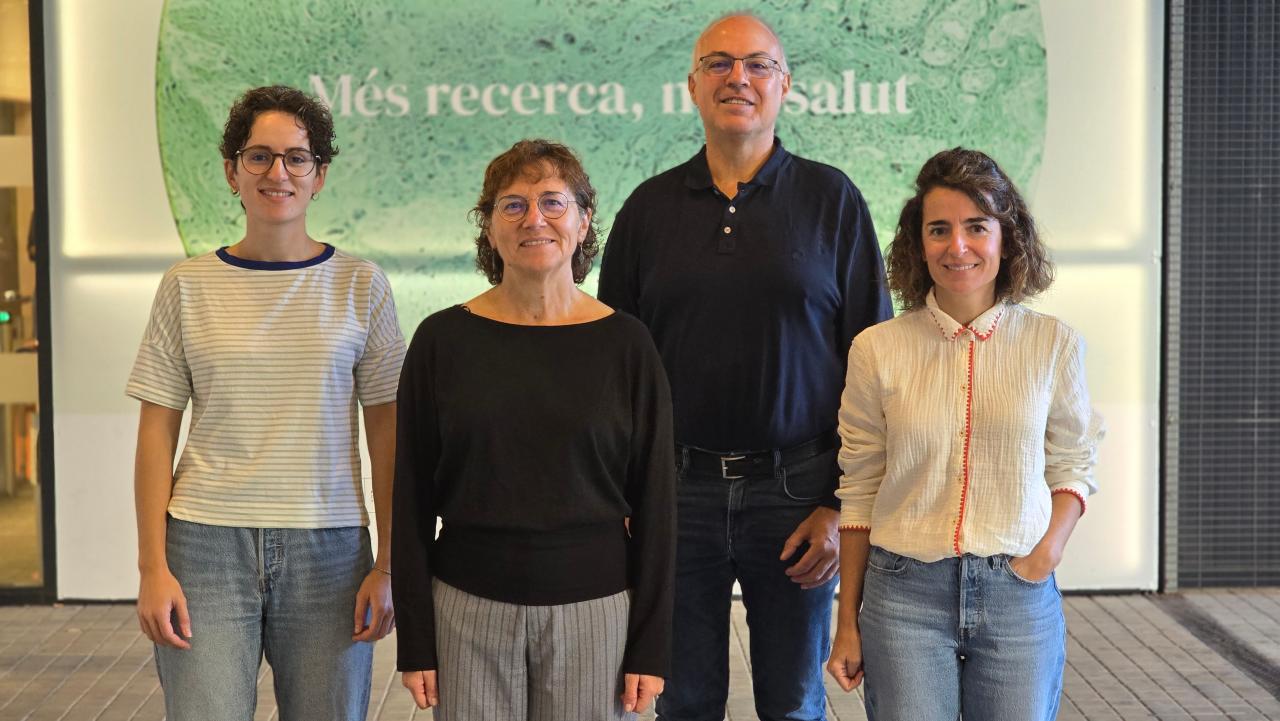
The project is led by Dr. Vicenta Llorente, a researcher at the Spanish National Research Council (CSIC) and head of the Lipids and Cardiovascular Pathology research group at IR Sant Pau, and has received a €15,000 grant from the Spanish Society of Cardiology (SEC) and the Spanish Heart Foundation (FEC). The funding is part of the 2026 Grants for Basic or Translational Research Projects program, which aims to advance knowledge in cardiovascular health, strengthen the capabilities of research groups, and promote the development of new prevention and treatment strategies.
"We want to investigate whether certain characteristics of low-density lipoprotein (LDL) particles can explain why people with Down syndrome are less susceptible to atherosclerosis than would be expected based on their cardiovascular risk factors," explains Dr. Llorente.
Understanding this phenomenon requires combining expertise in cardiovascular research, cholesterol metabolism, and neurodegeneration. For this reason, the project brings together a multidisciplinary team comprising Dr. Vicenta Llorente, María Teresa La Chica Lhoëst, Àngels Solanelles, Dr. Valérie Samouillan, Dr. Joan Carles Escolà-Gil, Dr. Mireia Tondo, Dr. Ana Cenarro, Dr. Juan Fortea, and Dr. Daniel Alcolea. The participating institutions include IR Sant Pau, the Barcelona Institute for Biomedical Research (IIBB-CSIC), and the Aragon Health Research Institute (IIS Aragón), with additional scientific collaboration from the University of Toulouse in France.
Two Populations With Very Different Risk Profiles
Familial hypercholesterolemia, which affects approximately one in every 250 people, is a genetic disorder characterized by elevated levels of LDL cholesterol in the blood from an early age. Alterations in genes involved in its metabolism impair the removal of these particles from circulation and promote the premature development of atherosclerosis, a process in which lipids and other components accumulate in arterial walls, increasing the risk of myocardial infarction and other cardiovascular events.
A different situation is observed in people with Down syndrome. Although they may have elevated triglyceride levels, reduced high-density lipoprotein (HDL) cholesterol levels, and other metabolic factors commonly associated with increased cardiovascular risk, their susceptibility to developing atherosclerotic lesions is relatively low. This observation suggests that protective mechanisms may be involved that are not reflected in conventional cholesterol tests.
«Comparing these two populations may help us understand which factors make LDL particles behave in a more or less atherogenic manner. It is not simply a matter of studying how much cholesterol circulates in the blood but also of understanding the properties of the particles that transport it», says Dr. Llorente.
The Structure of LDL Particles May Hold the Key
To address this question, the researchers will focus on apolipoprotein B100 (ApoB100), an essential protein in LDL particles that plays a role in their recognition by cellular receptors and their removal from the bloodstream. Its structure influences the properties of these particles and, when altered, may promote their aggregation and the accumulation of cholesterol in arterial walls.
Dr. Llorente’s team has already studied these mechanisms in people with familial hypercholesterolemia. The researchers have identified structural modifications in ApoB100 and increased rigidity of the LDL lipid core, associated with a greater tendency of these particles to aggregate. They have also demonstrated, in experimental models of familial hypercholesterolemia, that certain interventions aimed at stabilizing the conformation of ApoB100 can reduce LDL aggregation and the accumulation of atherosclerotic lipids.
“Our previous studies have proved that the structure of ApoB100 can change and that these changes have consequences for the behavior of LDL particles. We now want to analyze whether people with Down syndrome have different structural characteristics, such as greater protein flexibility or reduced rigidity of the lipid core, that may contribute to their cardiovascular protection,” explains the researcher.
The new study will compare samples from three groups of participants: people with familial hypercholesterolemia, people with Down syndrome, and healthy controls, with an expected 50 to 80 individuals per group. The researchers already have biological samples, clinical data, and informed consent forms from previous studies, which will facilitate the experimental analyses.
To characterize ApoB100, the researchers will use Fourier-transform infrared (FTIR) spectroscopy, a biophysical technique that makes it possible to examine the ultrastructure of proteins. The team will also study the size of LDL particles, their tendency to aggregate, and their ability to induce cholesterol accumulation in vascular smooth muscle cells, which can transform into lipid-laden cells and contribute to the development of atherosclerosis.
The results will be compared with participants’ clinical information, including blood lipid concentrations, cardiovascular history, and indicators of atherosclerosis. In the group of people with Down syndrome, data on cognitive function and biomarkers of neurodegeneration will also be included to explore possible associations among the parameters studied.
The Role of the APOE Gene in Cardiovascular Risk and Alzheimer’s Disease
The research will also consider variants of the APOE gene, which play an important role in cardiovascular and neurodegenerative diseases. One of these variants, the ε4 allele, has been associated with changes in lipoprotein metabolism and with characteristics of LDL particles linked to increased atherosclerotic risk.
This gene is also particularly relevant to research on Alzheimer’s disease. The ε4 allele is one of the major genetic risk factors for late-onset Alzheimer’s disease and also influences the progression of this disease in people with Down syndrome, a population with a high predisposition to developing the brain pathology characteristic of Alzheimer’s disease.
For this reason, the project will not be limited to comparing LDL particles among the three groups of participants but will also analyze their characteristics according to APOE genotype. This approach will make it possible to investigate whether the potential protective differences observed in people with Down syndrome are maintained in carriers of different variants of the gene.
“We are particularly interested in finding out whether the characteristics of LDL particles in people with Down syndrome vary according to their APOE genotype and whether the potential protective mechanisms are maintained in those who carry the ε4 allele. This comparison could help us identify factors that counteract its influence,” explains Dr. Llorente.
Although the project’s primary focus is cardiovascular, the researchers will also explore possible associations between LDL properties and certain indicators of neurodegeneration. This exploratory approach could provide information for future research into the relationship between lipid metabolism and Alzheimer’s disease, without attempting to establish a causal relationship between the two processes.
Toward New Cardiovascular Prevention Strategies
The knowledge gained could provide a foundation for future studies on new ways to assess cardiovascular risk. Although the results are not expected to have immediate clinical applications, the project will deepen our understanding of biological mechanisms that could become new research targets.
“Our long-term goal is to move toward a cardiovascular risk assessment that does not depend exclusively on blood cholesterol concentrations but also considers the characteristics and behavior of the particles that transport it. Understanding the natural mechanisms of protection against atherosclerosis could help us identify new therapeutic targets and more personalized prevention strategies,” concludes Dr. Llorente.
