
Endocrinology, Diabetes and Nutrition
Translational Medicine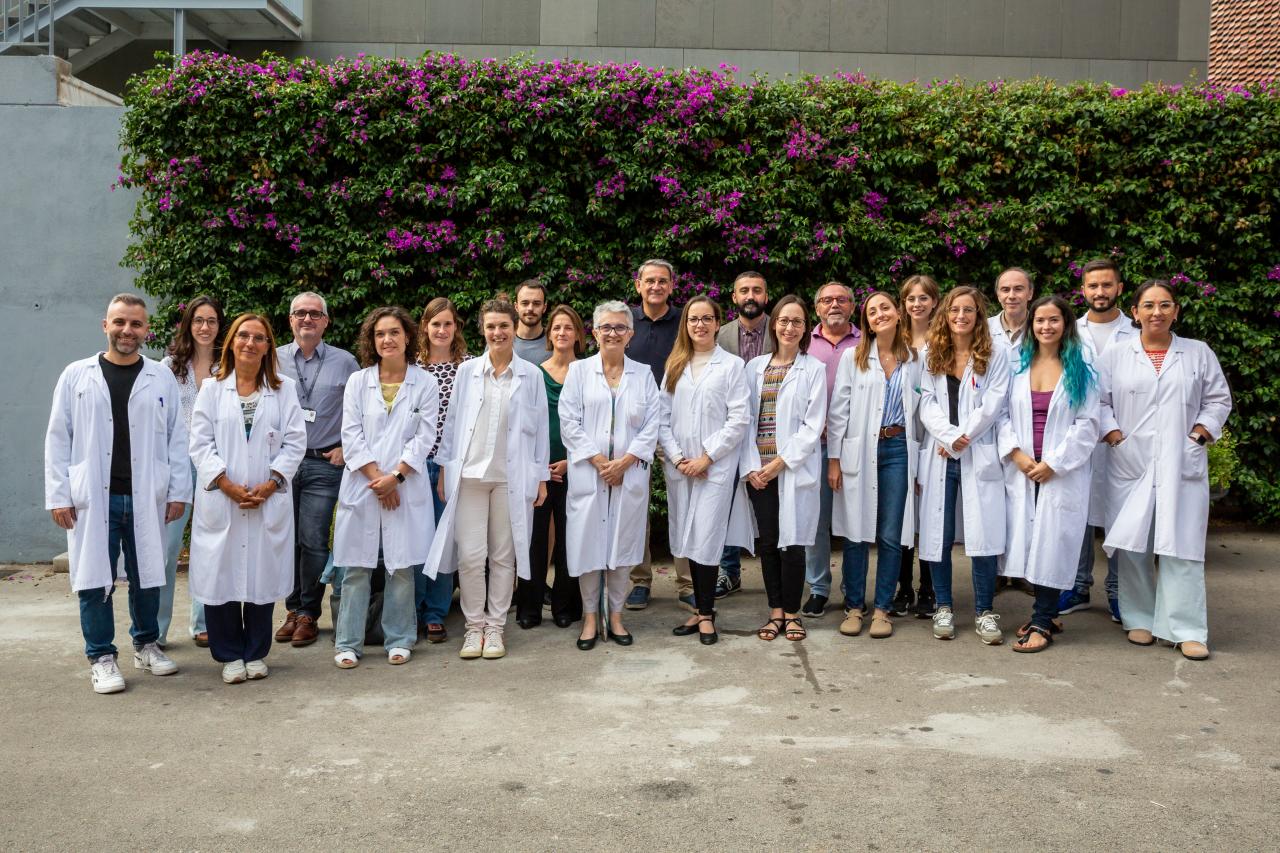
Our group is a multidisciplinary team consisting of endocrinologists, pharmacologists, biologists, and nutritionists. The group has different research lines in the area of diabetes and its associated metabolic diseases and complications, encompassing epidemiological, clinical, and translational research. We also address specific aspects in the nutritional field. This is a highly active, productive, and competitive group, both at national and international levels, a member of the XARTEC Salut network and AGAUR; and with two research groups belonging to the Centro de Investigación Biomédica en Red (CIBER, ISCIII).
Main Lines of Research
- Complications of diabetes, atherosclerosis, and cardiovascular disease. This line encompasses clinical and translational studies on the pathogenesis, biomarkers, and early detection and treatment of these complications, leading to most of the burden in terms of morbidity and mortality in diabetes. Several projects in precision medicine in diabetes are currently under way. (Mauricio Puente, Didac).
- Epidemiology of diabetes, primary care research, and research with large databases. This line is focused on the research of epidemiological aspects of diabetes using different sources of real-world data with large databases, especially the SIDIAP database (real-world evidence) in collaboration with J. Franch (IDIAP Jordi Gol research institute). (Mauricio Puente, Didac).
- Endocrinological diseases and pregnancy. Senior researcher in diabetes in pregnancy and technologies in the management of diabetes, such as insulin pumps and glucose sensors. This researcher’s team has participated in landmark studies in gestational diabetes, such as the CONCEPTT trial. (Corcoy Pla, Rosa).
- Thyroid nodular disease and càncer. Tumoral thyroid disease poses a diagnostic and therapeutic challenge. This researcher is currently focusing on the contribution of lipid metabolism in nodular thyroid malignancies. (Mato Matute, Eugenia).
- Diabetes and cardiovascular risk factors. This line studies the contribution of lipoprotein metabolism disorders to cardiovascular disease in patients with diabetes, dyslipidemia, and obesity. (Perez Perez, Antonio).
- Cellular injury in diabetes and associated metabolic diseases. The general objective is to identify new biomarker candidates related to tissue damage in obesity/diabetes and explore their potential use for the diagnosis/prognosis of mainly hepatic and myocardial complications and the evaluation of new therapeutic strategies in this area in experimental models and in patients. (Julve Gil, Josep).
Scientific Challenges
Endocrine neoplasms
- Molecular markers of the epithelial lineage: expression of the ABCG2 gene/BCRP1 transporter.
- Transcriptomics and proteomics as prediction and prognosis instruments for epithelial thyroid cancer.
- Intramural CELL-NANO-THYROID project: investigation of human mesenchymal cell capacity as an instrument for administering anti-tumor cell drugs in the form of conjugated nanoparticles.
- Role of cholesterol & cholesterol metabolites in thyroid neoplasms' differentiation.
- Assessment of glycated immunoglobulins as serologic markers of thyroid carcinoma.
Autoimmune Diabetes Mellitus
- Classic type 1 autoimmune diabetes mellitus: different aspects of the disease and its management.
- LADA-type diabetes: prevalence of metabolic syndrome among patients with LADA compared to prevalence among patients with classic type 1 diabetes, type 2 diabetes, and the general non-diabetic population in European countries
Diabetes and pregnancy
- Clinical research aimed at optimizing care for women with pregestational and gestational diabetes at preconception, pregnancy, birth, and postpartum stages. Specifically, addressing the relevance of adequacy of pregnancy weight gain, maternal predictive characteristics, and associations with pregnancy outcomes.
Technology, Telemedicine, and Intelligent Systems for Therapeutic Optimization of Diabetes Mellitus
- Technology in the treatment of diabetes with a special focus on insulin (new insulins, pumps) and glucose measurement, including sensors.
- Development of a technological platform for the prediction, prevention, and treatment of obesity, DM, HTA, dyslipidemia, and cardiometabolic risk.
Optimization of the Treatment of Obesity, Hyperlipidemia, Metabolic Syndrome, and Complications
- Mechanisms linking diabetes, obesity, and dyslipidemia with cardiovascular disease
- Optimal treatment and prevention of cardiovascular risk associated with obesity, hyperlipidemia, metabolic syndrome, and diabetes.
Diabetic complications: atherosclerosis and microvascular disease
- Clinical and translational studies that explore research in the pathogenesis, biomarkers, and early detection and treatment of microvascular and chronic complications, especially atherosclerosis.
- We are currently focusing on different clinical and pathogenetic aspects of MASLD (metabolic-associated dysfunction steatotic liver disease) in diabetes.
- Erectile dysfunction (ED) in patients with type 2 diabetes: currently a qualitative study on health care professionals, and an epidemiological study on ED using the SIDIAP database.
Precision medicine in diabetes
- Genotyping and deep phenotyping of people with diabetes
- Use of artificial intelligence in the characterization of diabetes
Diabetic epidemiology: primary care research with large databases.
- Research on diabetes mellitus in primary health care of Catalonia. Recently, the group has developed projects using the SIDIAP database in different aspects of real-world evidence.
- Use of AI as an approach to characterize diabetes mellitus using real-world practice databases.
Clinical trials in the area of the Endocrinology, Diabetes, and Nutrition Research Group.
- There are currently 13 ongoing clinical trials in our group.
Nicotinamide supplementation
- Research on the role of nicotinamide (NAM) supplementation in several tissues of experimental models (brain, intestinal epithelial, and cardiac).
- In an interventional study, analyze the effects of NAM on the intestinal microbiome and its relationship with diabetes.
- Identification of new NAM-sensitive biomarkers to fight diabetes.
Contact
Dídac Mauricio
dmauricio@santpau.cat