
Neurobiologia de les Demències
Malalties neurològiques, neurociència i Salut mental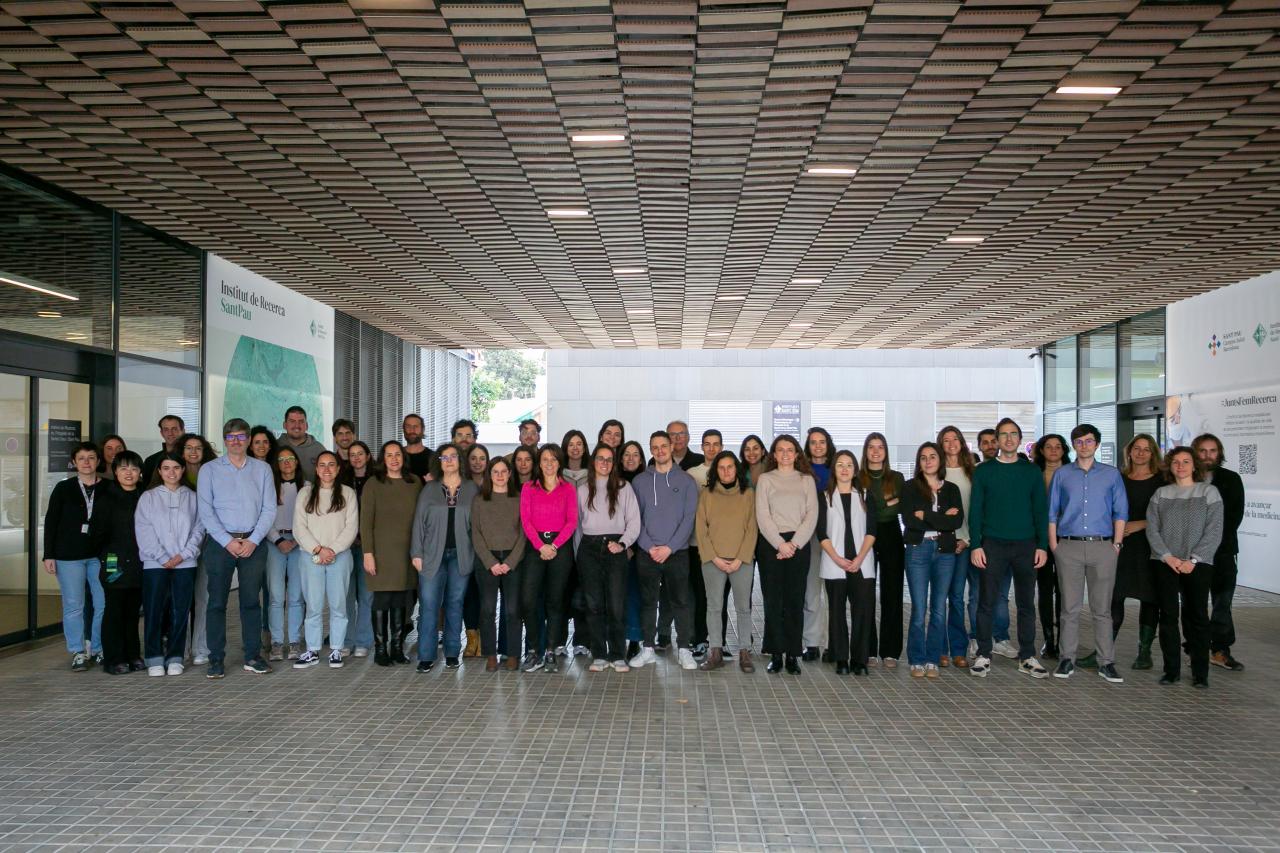
The Sant Pau Memory Unit research group is a multidisciplinary team of over 70 professionals, including clinicians, scientists, engineers, and technicians, working within a strongly translational framework that integrates clinical care with biomarker, imaging, and computational research. The group maintains high scientific productivity, secures competitive funding, leads collaborative projects, and provides advanced training for residents and early-career researchers in an international, innovation-driven environment, fostering rapid translation into clinical practice.
Principals línies de recerca
- Natural history, diagnosis, and treatment of frontotemporal lobular degeneration. (Illan Gala, Ignacio)
- Characterization of epilepsy in Alzheimer's disease and Down syndrome. (Carmona Iragui, Maria)
- Sleep and neurodegeneration. (Gimenez Badia, Sandra)
- Integrative Genomic and Transcriptomic Approaches to Neurodegenerative Diseases with a Focus on Neuroinflammation. (Dols Icardo, Oriol)
- Clinical application of biochemical markers in degenerative dementias. (Alcolea Rodriguez, Daniel Andres)
- New tools for neuropsychological assessment in people with Down syndrome. (Del Hoyo Soriano, Laura)
- New neuropsychological assessment tools in sporadic neurodegenerative dementias. (Sala Matavera, Isabel)
- Multimodal neuroimaging in neurodegenerative diseases. (Bejanin, Alexandre Pierre Armand)
- Cellular and neuropathological basis of neurodegenerative diseases. (Lleo Bisa, Alberto)
- Neurobiology of Language and Cognition in Degenerative Disease: From Mechanisms to Clinical Application. (Santos Santos, Miguel Angel)
- Sporadic and Genetically Determined Alzheimer’s Disease: From Natural History to Biological Diagnosis and Treatment. (Fortea Ormaechea, Juan)
Scientific Challenges
Since its founding more than 20 years ago, our research group has undergone sustained and exponential growth and is now firmly established as an international leader in translational research in neurodegenerative dementias. We currently host 19 principal investigators leading active competitive grants. While this expansion reflects our scientific maturity and productivity, it also poses increasing organizational and structural challenges. Our group remains distinctive within the institutional setting, both in size and in the integration of high-level clinical care with scientific excellence. Moving forward, our priority is to ensure sustainable growth while preserving the values, cohesion, and translational vision that have driven our success.
The field of dementia is undergoing a profound transformation. Digital health tools, blood-based biomarkers, and disease-modifying therapies for Alzheimer’s disease are now a clinical reality rather than a future prospect, reshaping diagnostic pathways, patient stratification, and therapeutic decision-making. Ultrasensitive plasma technologies, including digital immunoassays such as those developed by Quanterix, together with automated platforms from Fujirebio, are becoming central to both research and routine care. Combined with our large, deeply phenotyped cohorts and active participation in multicenter clinical trials, our group is uniquely positioned to lead the implementation and validation of these innovations in real-world clinical practice. Based on this evolving landscape, the main challenges for the coming years include:
- Maintaining high-impact scientific productivity and competitive funding.
- Strengthening leadership in European and international collaborative projects.
- Expanding strategic partnerships with pharmaceutical and biotechnology companies to promote innovation, intellectual property, and technology transfer.
- Adapting research structures to the integration of disease-modifying therapies into routine care.
- Continuing to advance the development, validation, and clinical implementation of next-generation digital and blood-based biomarkers.
Contacte
Juan Fortea
jfortea@santpau.cat